
Parallel Universe: Every Trading Card Parallel Explained
What a parallel actually is
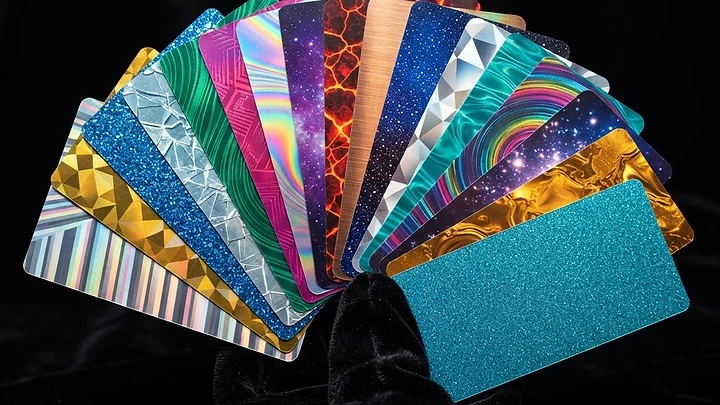
A parallel is the same card - same player, same photo, same number - printed again with a different finish, border colour, or print run. The base card is the standard version. Everything else is a parallel of it.
They exist for three reasons: chase, pack economics, and the pleasure of completing a rainbow (every parallel of one card). Foil and refractor technology in the early 1990s turned parallels from a novelty into the backbone of the modern hobby, and today a single card in a large set can exist in 30 or more versions.
That is why two cards that look almost identical can differ by a factor of 500 in price - and why mislabelling is the most common reason a card sale gets returned.
The vocabulary, in plain English
Finish parallels
- Refractor - the original. Introduced by Topps on Chrome in the 1990s: a prismatic finish that throws rainbow light. The single most important parallel family in the hobby.
- Prizm / Silver Prizm - Panini's equivalent. The plain "Silver" is the base Prizm parallel and the most heavily traded card in modern basketball and football.
- Holo / Optic Holo - Donruss Optic's signature pattern.
- X-Fractor, Atomic, Mojo, Sapphire, Wave, Shimmer, Cracked Ice, Disco, Mosaic, Laser, Scope, Nebula - pattern names. Most are decorative; a few are genuinely scarce.
Numbered parallels
- Cards stamped with a print run: /299, /199, /99, /49, /25, /10, /5, 1/1.
- Superfractor - Topps Chrome's one-of-one gold finish. The most famous 1/1 in the hobby.
- Printing plates - the four metal plates (cyan, magenta, yellow, black) used to print the sheet, each a 1/1.
Structure
- Base card - the standard version. Not a parallel.
- Short print (SP) / super short print (SSP) - an unnumbered variation with a different photo. Scarce without a serial number, which confuses a lot of buyers.
- Inserts - Kaboom, Downtown, Color Blast. Not parallels of the base card; separate case hits with their own scarcity.
- RC - rookie card. 1st Bowman - a prospect's first Bowman card. Both carry a premium on parallels.
How to identify what you are holding
- Flip it over. Serial numbering, the word PRIZM or REFRACTOR, and a manufacturer code usually appear on the back.
- Tilt it under a light. Silver Prizm looks flat grey in dull light and explodes under direct light - which is exactly how people get fooled by photographs.
- Check the official checklist for that product and year. Some sets have more than 30 parallels. If you cannot name yours, you cannot price it.
- Look up the population report. Grading companies publish how many of a given parallel they have graded at each level.
- On a marketplace, demand the back. A front-only photo cannot distinguish a base card from a Silver.
Pricing rules that hold up
- 1/1 beats /5 beats /10 beats /25 beats /99. Obvious, and consistently true.
- Rookie-year parallels of stars outperform veteran parallels. The market pays for firsts.
- Colour match sells. A team-colour parallel of a popular player carries a premium with that team's collectors.
- First year of a product line wins. Early-year Chrome and Prizm parallels beat later ones because they established the category.
- The grade multiplies everything. A PSA 10 of a /99 card can be three to five times a raw copy.
- Liquidity is uneven. A base and a Silver of any star are easy to sell. A /25 of a mid-tier player is not.
Parallel inflation - the trap nobody warns you about
When a manufacturer prints dozens of parallels per card, scarcity is a design decision, not history. Two consequences follow.
One: "numbered" no longer means rare. A /299 of a modern set may be more common than an unnumbered 1990s insert.
Two: the market polarises. The top chase (the 1/1) gets more expensive while the middle of the rainbow thins out and becomes hard to sell at any price.
Practical test: if the print run of a parallel is a large fraction of the base print run, treat it as a cosmetic variant, not a scarcity play. Buy it because you like how it looks, not because you expect it to appreciate.
Storing and selling parallels properly
- Penny sleeve, then top loader, then a team bag. Never a screw-down case - they pinch the surface.
- Keep out of direct sunlight. Foil fades faster than plain card stock.
- Photograph front and back under even, direct light so the finish reads correctly.
- Write the exact parallel name and print run in the listing title. "2023-24 Prizm Victor Wembanyama Silver Prizm RC" is a listing. "Wembanyama card" is a dispute waiting to happen.
- If you cannot identify the parallel with confidence, list it as a base card and price it as one. Honesty is cheap; returns are not.
Further reading
- Market Movers - Every Sports Card Parallel Finally Explained
- r/sportscards - community guide to parallels, refractors and variants
Last updated: November 2026. Parallel names and counts change with every product release; always check the current checklist.
Approximate INR conversions use ₹88 = USD 1 (November 2026) and will move with the exchange rate.