
The Great Indian Grail Rush: Why Collecting Is Exploding in India
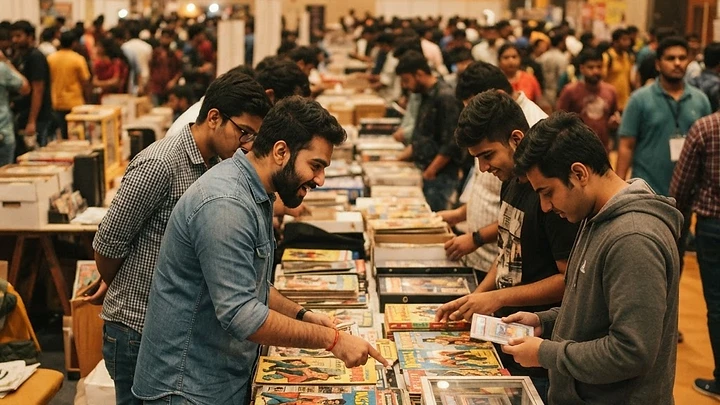
The short version
India's collectibles market is forecast to grow at roughly 10.5% a year between 2026 and 2033, against about 6.9% globally - one of the fastest growth rates of any major market (Grand View Research). The global collectibles market was valued at around USD 320 billion (≈ ₹28.2 lakh crore) in 2025 and is projected to reach USD 536 billion (≈ ₹47.2 lakh crore) by 2033, with trading cards growing at about 7.4% a year and Asia-Pacific leading on manga, anime and toy culture.
Translation: this is not a niche hobby any more. It is a young asset class with a very Indian accent.
It started with cricket, not Pokémon
Ask any Indian collector over 25 how they started and you will hear the same three things: stickers, tazos, and a cricket album they filled at school.
- Cricket trading cards - the collectible albums of the 2000s and 2010s were the gateway drug for an entire generation.
- Sticker albums and chip-packet tazos - cheap, ubiquitous, and deeply nostalgic.
- Family collections - stamps, coins, and the odd bundle of old comics in a grandparent's cupboard.
Nostalgia plus first disposable income is the single most reliable demand engine in this hobby. It is exactly the formula that built the American card market, and it is now playing out in rupees.
What changed after 2020
Five things, in roughly this order:
- Grading went global. Third-party grading became the shared language of value. More than 20 million cards were professionally graded worldwide in 2024, a 16% jump on 2023, with PSA alone handling over 15 million submissions (Mordor Intelligence). Indian collectors stopped describing condition in adjectives and started quoting numbers.
- Payments and shipping stopped being a barrier. UPI, international cards and freight forwarders made buying from the US, Japan and the UK a routine transaction rather than an expedition.
- Content went local. Unboxing reels, live breaks and card-focused YouTube channels gave the hobby an audience - and a price feed.
- Retail appeared. Dedicated trading-card stores have opened in metro cities - Mumbai's TCG Republic, billed as India's first dedicated TCG store, opened in 2026 - alongside the long-running Comic Con India circuit, which began in New Delhi in 2011 and now spans multiple cities.
- Cricket became collectible IP. When the country's most-followed athletes appear on modern cards and memorabilia, local price discovery follows.
The three tiers of the Indian market today
Nostalgia tier (roughly ₹100 - ₹5,000). Cricket card sets, bulk Pokémon, Amar Chitra Katha, Raj Comics, Tintin and Asterix runs. High volume, thin margins, enormous emotional pull.
Grail tier (roughly ₹5,000 - ₹2,00,000). Graded vintage Charizards, signed cricket memorabilia, key first-appearance comics, sealed product from the 1990s.
Trophy tier (₹2 lakh and up). PSA 9 and 10 vintage Pokémon, low-numbered modern cards, Golden and Silver Age comics. Small population, few buyers, and prices that follow global auctions.
What is genuinely holding the market back
It would be dishonest to write a hype piece. Four real problems:
- Liquidity is thin. A card can be worth $20,000 (≈ ₹18 lakh) on a US price guide and still be unsellable in India this month. Depth above roughly ₹5 lakh is limited.
- Grading friction. Shipping to the US, insurance, customs and 8-14 week turnaround times all add cost. Budget ₹8,000-₹12,000 per card all-in before you decide a grade is worth chasing.
- Counterfeits. Fake slabs, trimmed cards and modern reprints sold as originals are the biggest risk for new buyers. Always verify the certification number on the grading company's own website.
- Climate. Monsoon humidity destroys paper. Silica packets, sleeves, top loaders and a dry cupboard are not optional.
How to collect well here
- Buy what you love first, liquidity second. You will hold most of it longer than you expect.
- Pick one lane. Indian cricket autographs, or 1999-2003 Pokémon, or Silver Age comics. Depth beats spread.
- Never buy an expensive raw card from a photo alone. Ask for the back, the corners, and a video in raking light.
- Keep a record. Purchase price, date, grade, certification number, and where you bought it. Provenance is half of resale value.
- Sell where buyers are protected. An escrow-style marketplace beats a DM and a bank transfer.
- Insure the top of your collection. It is an asset now whether you treat it as one or not.
The next five years
Expect more city-level card shows, local grading drop-off points, rupee-denominated price guides, and Indian sports IP appearing in global sets. The gap that will close fastest is information: today a Delhi collector and a Dallas collector look at the same auction result, and that alone compresses the market.
The collectors who do well will not be the ones who buy the most. They will be the ones who learn to read a grade, a population report and a sale history - and then buy patiently.
Sources
- Grand View Research - Collectibles Market Size and Forecast, 2026-2033
- Mordor Intelligence - Trading Card Game Market Analysis, 2026-2031
- Comic Con India - history and cities
Last updated: November 2026. Prices and forecasts move; verify figures before you transact.
Approximate INR conversions use ₹88 = USD 1 (November 2026) and will move with the exchange rate.